
Pillar 2: Restore
Reconnect your body and rebuild your foundations.
Before you can build strength or return to exercise, your body needs to be functioning well again. This phase focuses on restoring key systems that support how you move, feel, and function every day.
-
Pelvic Floor Foundations:
Get to know your internal support system. We work on activation and awareness, and the potential link between the pelvic floor and your symptoms.
-
Core Connection Method:
Reconnect with your core properly. We focus on returning to baseline, and manage any abdominal separation.
-
Symptom Support:
Assisting with management of any symptoms that may have arisen postnatally. Bladder, bowel, prolapse, scar sensitivity/ concerns or pain are monitored, and gentle movement provided to restore function.
2.1: The Pelvic Floor (10min)
Resources
WATCH
2.2: The Diaphragm and the Pelvic Floor (6min)
Resources
UNDERSTAND
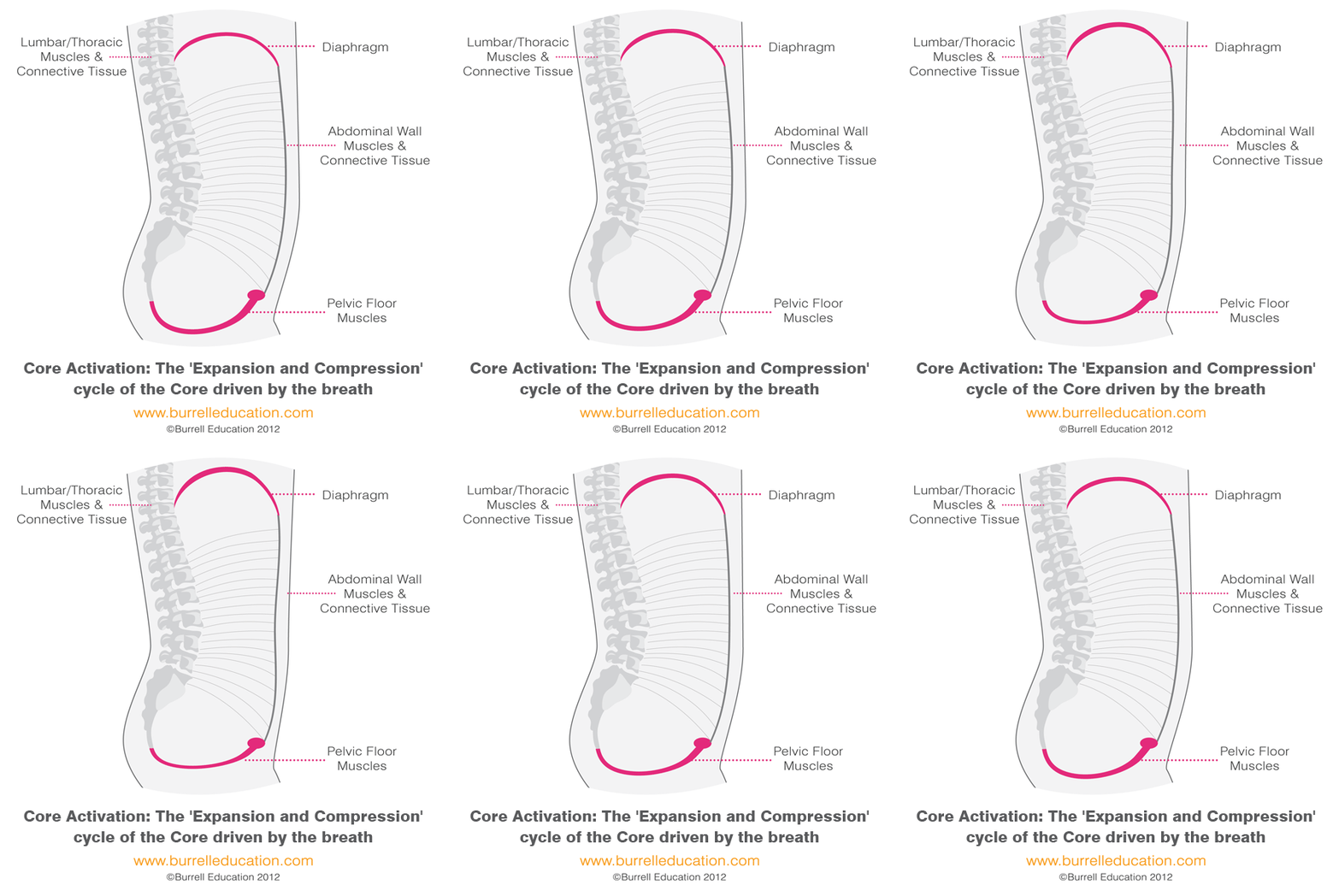
Watch how your diaphragm and pelvic floor work together as you breathe in and out.
Breathing IN = pelvic floor relaxes/ lowers down
Breathing OUT = pelvic floor moves upward

2.3: Early Postnatal Recovery (20min)
Resources
EXERCISES
Getting out of bed after a caesarean
2.4: Bladder and Bowel Habits - Early Postpartum (15min)
Resources
WATCH
Optimal toilet positioning to empty bowels
BOWELS
Options post birth to optimise easier emptying- Movicol; Kiwi Fruit; Prunes; Metamucil
Note: message practitioner prior to commencing a new bowel routine.
BLADDER
Timed voiding should be led by your practitioner, and only when you know that there aren't any other bladder concerns present (e.g. not completely emptying, UTI's)
Postpartum times voiding may start at emptying the bladder every 2-3 hours. You can set a reminder on your phone to help with remembering.
Note- you should ensure that you are getting adequate fluid intake - this is 1L extra if breastfeeding!
2.5: Abdominal Separation (10min)
Resources
SELF ASSESSMENT
Abdominal separation (this will be also checked by Emma)
Note - we are more interested in the tone of your muscles here, not the size of the gap. Stronger core = better function.
UNDERSTAND
Rectus abdominals diastasis (RAD) is a separation of the rectus abdominal muscles, in which the fascia (linea alba) stretches. This stretch happens in 100% of pregnancies in the later stages to make room for baby.

2.6: Stress Urinary Incontinence and Urge Urinary Incontinence (20min)
Resources
TOOL
ICIQ-UI - an objective measure for urinary leakage; fill this out and send to Emma if you have not already done so.
UNDERSTAND
Continence Health Australia- living well with incontinence
TRY THIS
Urge Suppressant Techniques- Bladder training - The Royal Women's
2.7: Pelvic Organ Prolapse (20min)
Resources
TOOL
Pelvic Organ Prolapse Interactive Assessment Tool
Note: Emma can assess and will discuss your prolapse results if you are having symptoms of heaviness, dragging or a lump or bulge.
POP-SS assessment - please fill this out and send to Emma if you have not already done so.
LEARN
REAL LIFE STORIES
Dealing with a prolapse diagnosis
2.8: Initial Core Connections (10 min)
Resources
EXERCISES
Your Core- 3 core connection exercises in 3 minutes
2.9: Looking After Your Caesarean Scar (20min)
Resources
EDUCATION
How to use and care for your silicone
TOPICAL SCAR OPTIONS
Silicone scar patch- Bare-Mum Silicone Gel Scar Strips ($99); BIEN Silicone Scar Strips ($29); Scanban- purchase from Empelvic ($30)
Silicone scar gel - Strataderm Scar Therapy Silicone Gel (~$30)
Oil options- Rosehip oil, Vitamin E oil, Bio-Oil
ABOUT
YOUR BIRTH
Caesarean birth - the road forward
2.10: Returning to Intimacy
Resources
EDUCATION
Tips for returning to sex postpartum
LOCAL SUPPORT
Nurtured Intimacy - sexologist, councillor (Bunbury based)
2.11: Perineal trauma (vaginal birth, tearing, episiotomy) (10 min)
Resources
WATCH
Understand the types of perineal tears
READ
Birth Trauma Australia- Physical Trauma: Perineal tears
REAL STORIES
Perineal trauma - Australian Birth Stories
2.12: Caesarean scar progression (5 min)
Resources
WATCH
Advanced caesarean scar mobilisation stretches
How a caesarean scar can contribute to"overhang"
What scar tightness looks like
ACTIVITY
Note down any movement/ activity that you feel pulling/ tightness/ pain --> send this through on voxer for stretches specific to your movement restriction.
2:13: How to address Urinary Urgency (15 minutes)
Resources
WATCH
Bladder urge suppressant techniques
Bladder urge suppression - The Royal Women's
2.14: Nervous system regulation
Strategies
HARD DAY CHECKLIST- CLICK HERE
1. "Micro rests"
Your nervous system doesn't always need an hour alone to reset. Small moments throughout the day can help calm stress responses.
Ideas:
- 3 slow deep breaths before picking up your child
- Sitting in the sun for 2 minutes
- Drinking a cup of coffee/ tea without multitasking
- Lying on the floor while your baby plays nearby
- A slow walk outside (no phone!)
Small regulation tasks done consistently can be more realistic, and more effective, in a busy household.
2. Body regulation
The nervous system responds best to physical cues of safety and calm.
Helpful strategies to try:
- Slow breathing (try box breathing linked below)
- Gentle movement/ stretching (try below)
- Outdoor time
- Warm showers
- Hands on chest/ ribs whilst breathing
3. Prioritise nourishment and hydration
Under-fueling can add to a heightened stress state.
Try to
- Eat regularly
- Include protein and carbs
- Stay hydrated
- Avoid relying on caffiene to get through the day
Your nervous system needs energy to regulate well.
4. Sleep
When sleep is interrupted, it's normal to feel more emotional, overstimulated, anxious, reactive and overwhelmed.
This is your nervous system working hard to get you through.
On difficult days, try to:
- Simplify when possible
- Reduce pressure: schedule less on these days and focus on the essentials
- Ask for help: either family support, or an organisation like Radiance for emotional support
5. Watch for signs your nervous system may need more support
Signs include:
- Constantly feeling "on edge"
- Difficulty relaxing
- Shallow breathing
- Tension through jaw/ pelvic floor
- Irritability
- Difficulty switching off at night
- Feeling "wired but tired"
If these feelings are persistent or overwhelming, additional support from your GP, an organisation such as Radiance or mental health professional may help.
CHECKLIST
TRY IT OUT
Mindfulness/ breathing... try 1-2
Box breathing technique for nervous system regulation (3 min)
Grounding exercise for racing minds (3 min)
Belly breathing to relax (3 min)
Yoga/ movement
Somatic exercises for nervous system regulation (5 min)
It's a bit alternative... so depends what you are into. But worth a shot to feel more relaxed, calm and grounded after.
RESOURCES
PANDA mental wellbeing checklist
Inside the Postpartum Brain: The Neuroscience of Postpartum Depression
SEND TO YOUR PARTNER -->
2.15: Postpartum Recovery
Resources
LISTEN
2.16: Birth Trauma Check-In
Resources
COPE city birth trauma scale (2 min)
Congrats --> Pillar 2 is complete!
Now that you are more aware of your movement, are activating well and have the foundations down we can move onto the exciting part. Time to strengthen!

